How LLMs Happened: the story of modern AI, told in order.
You use AI every day. But could you explain why modern AI needs transformers, RAG, tools, agents, reasoning, and evals? This book turns the development of large language models into one continuous illustrated story. Each chapter begins with something that did not work and follows the idea that fixed it.
Get the book → See what’s inside
Full-color illustrated PDF. One-time purchase. Rated 5.0 out of 5 on Gumroad.
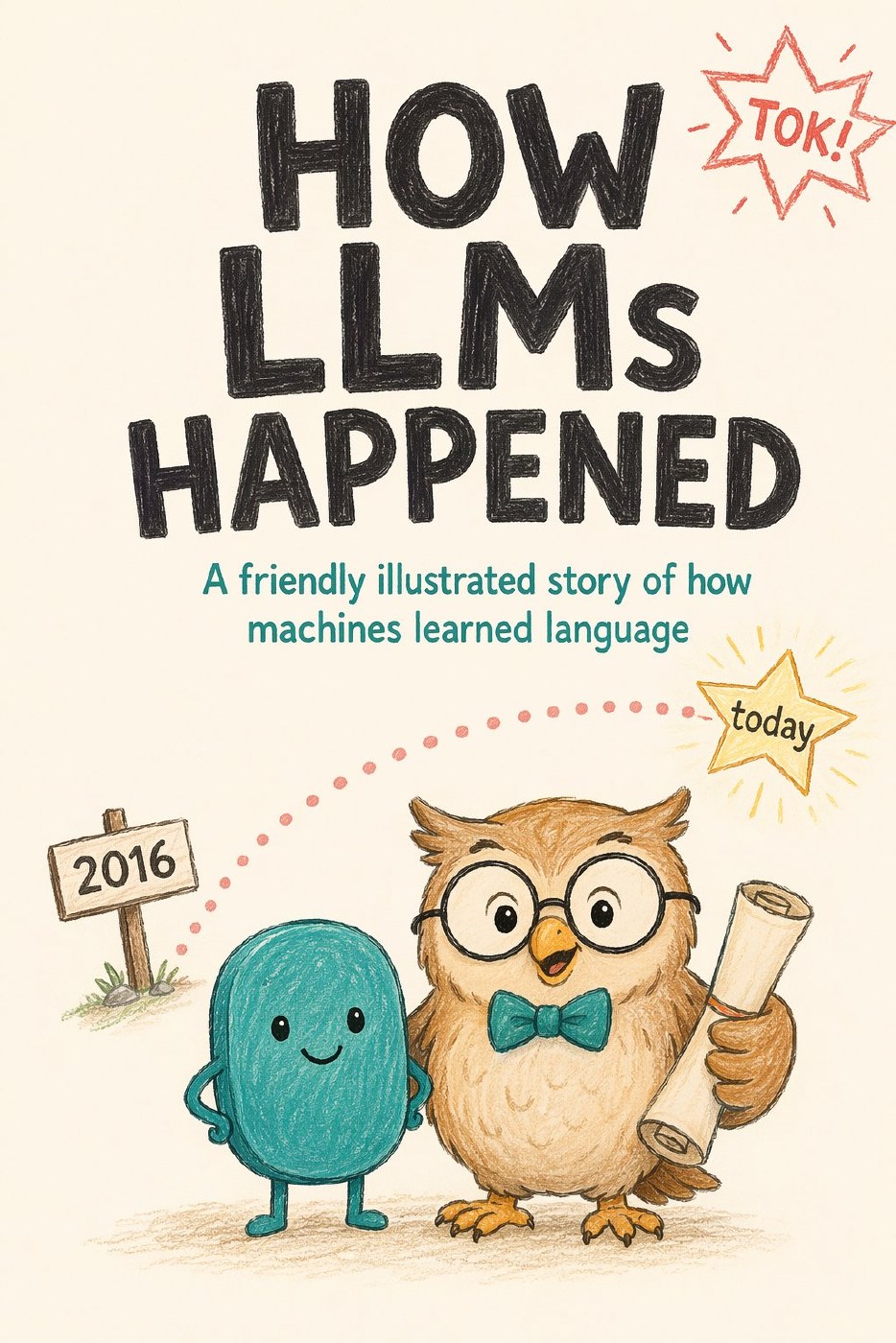
How LLMs Happened
A friendly illustrated story of how machines learned language.
LLMs Research · Second edition, 2026
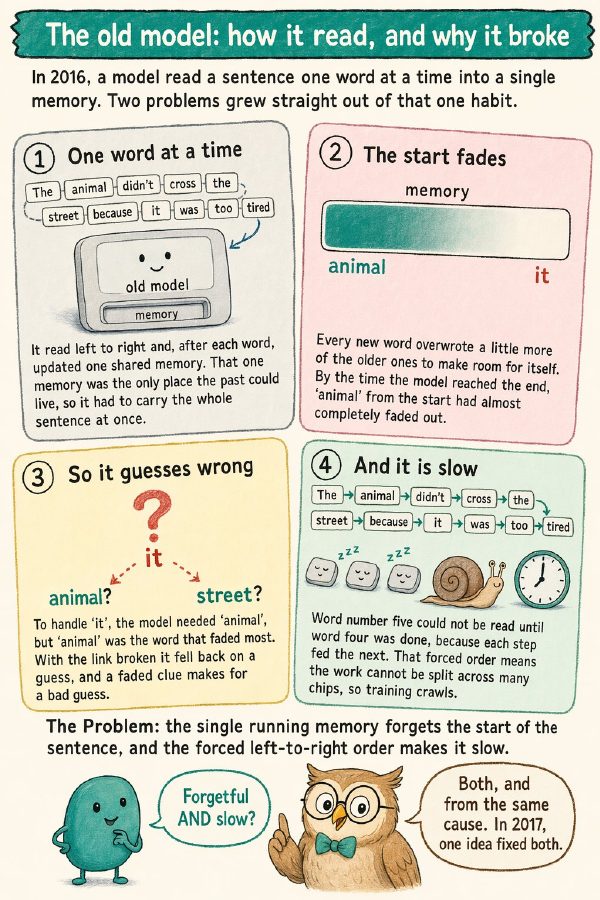
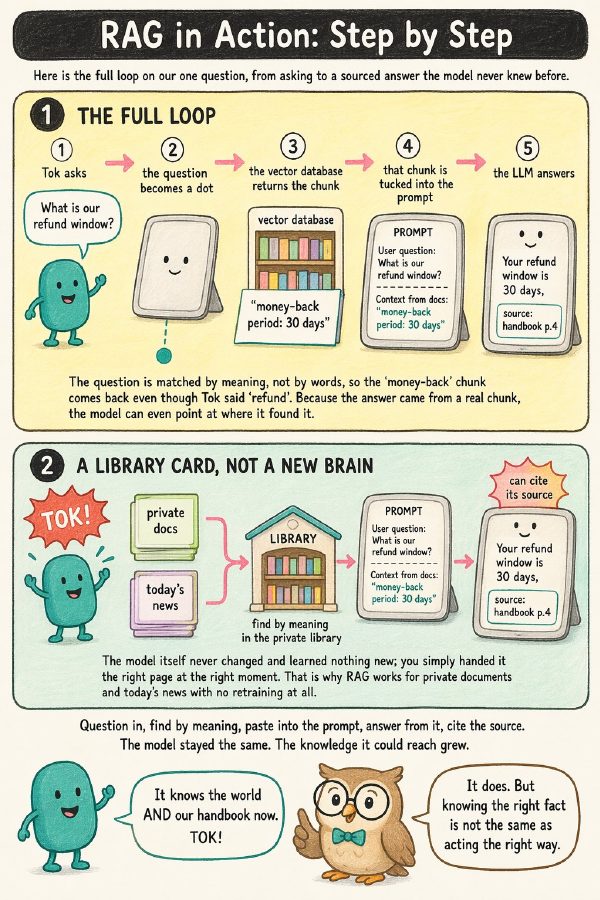
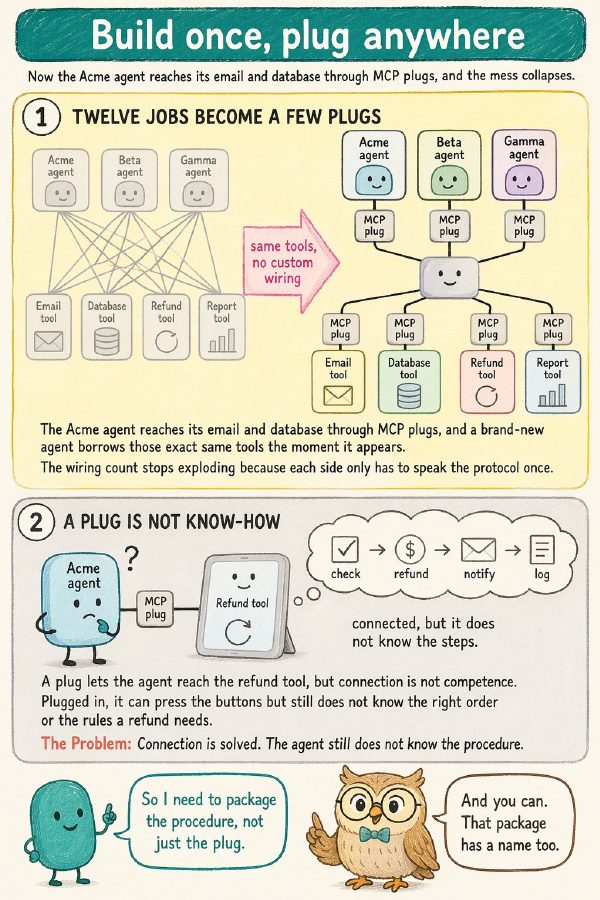
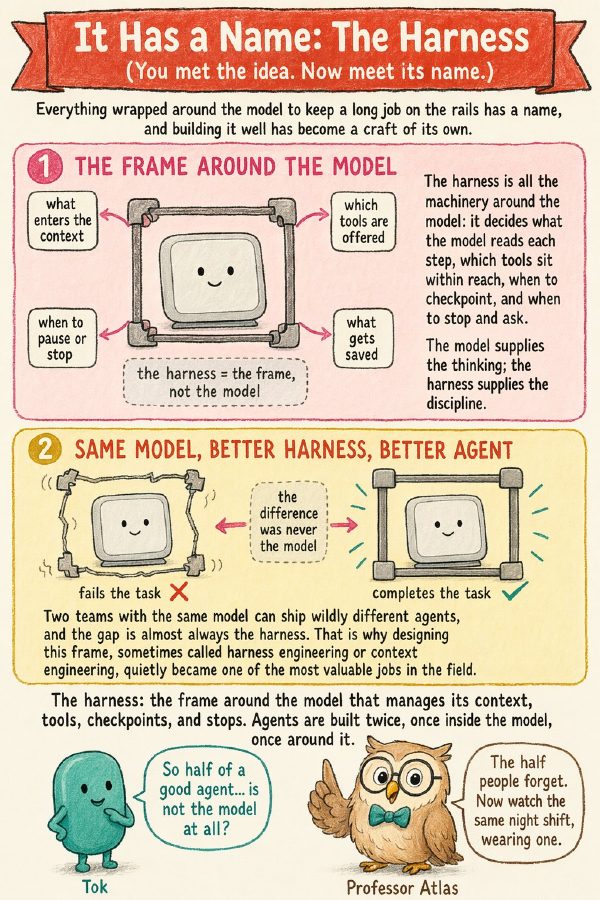
A few pages from inside
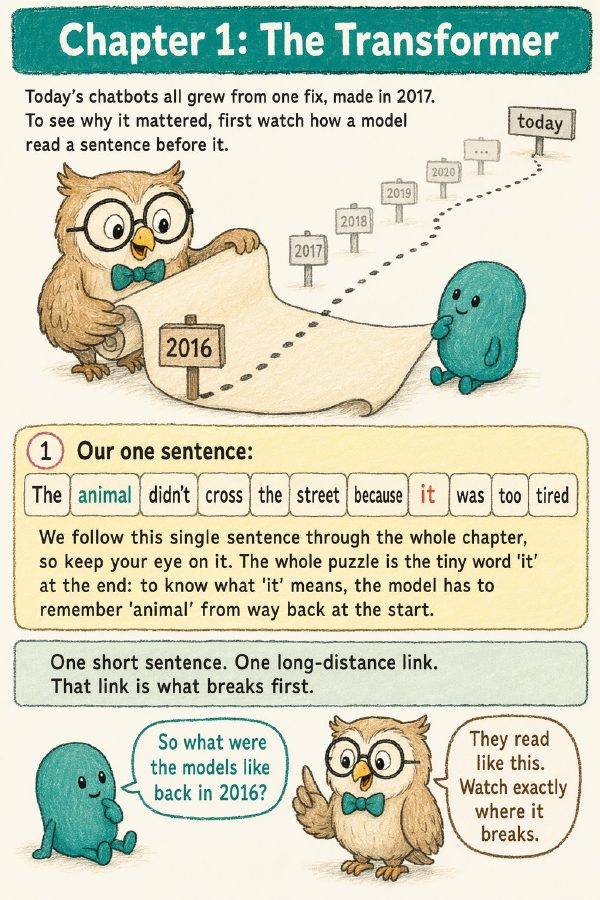
Every page is a full-color illustrated spread. Tok spots what is broken, Atlas shows the fix, and the diagrams carry the explanation. Scroll to browse →
The journey: 16 chapters in six parts
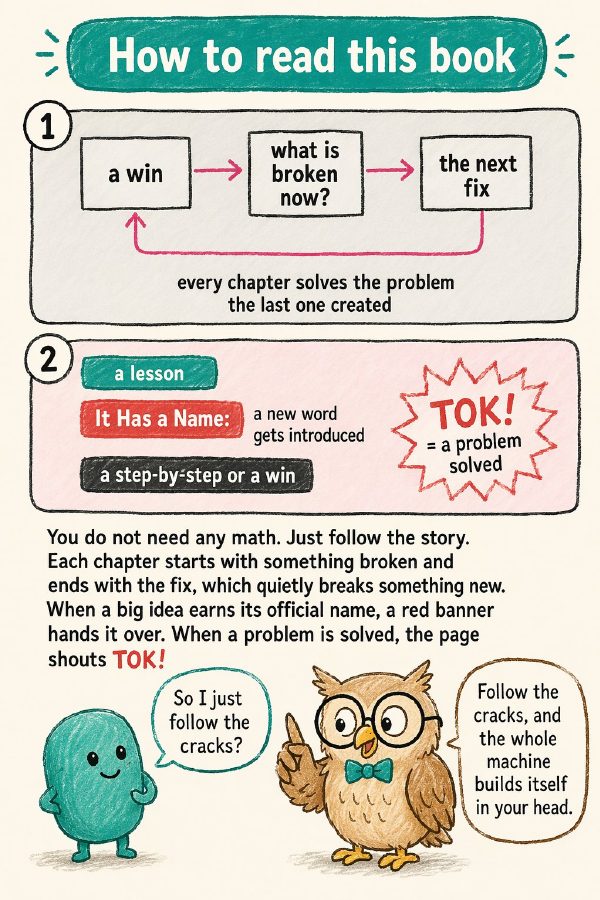
Every chapter starts with something broken and ends with the fix, and the fix quietly breaks something new. That loop carries the story from a clumsy word-reader in 2016 to the assistants we use today.
- I.A machine that understands language. The Transformer · Make It Bigger · Where the Words Came From. ch. 1–3
- II.Making it useful. Teach It Manners · Just Ask Nicely · Look It Up · Teach It Your Way. ch. 4–7
- III.Making it act. Let It Act · Let It Loop · Plugs and Powers. ch. 8–10
- IV.The wider world. Beyond Words · Slow Down and Think · Smaller, Cheaper, Everywhere. ch. 11–13
- V.Making it dependable. The Harness · How Do We Know It Is Good. ch. 14–15
- VI.Where we are. The Stack Today. ch. 16
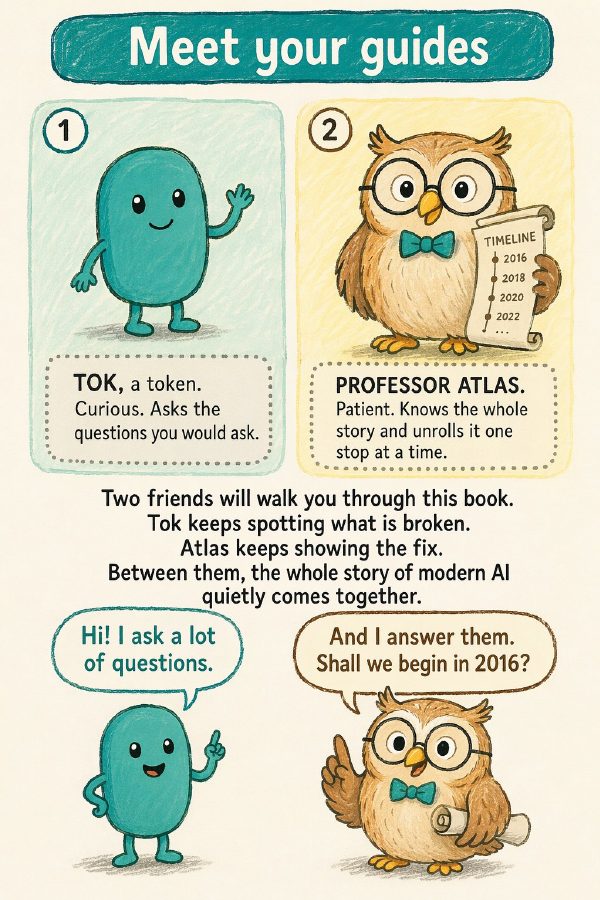
Meet your guides
- Tok is a small teal token. Curious. He asks the questions you would ask, and keeps spotting what is broken.
- Professor Atlas is a patient owl. He knows the whole story and unrolls the timeline one stop at a time, showing each fix.
- When a big idea earns its official name, a red banner hands it over. When a problem gets solved, the page shouts TOK!
- Between the two of them, the whole story of modern AI quietly comes together.
Who it’s for
- Engineers beginning to work with LLMs who want the conceptual map before the papers.
- Technical product managers and founders who need to reason about what these systems can and cannot do.
- Students and self-taught learners who want the ideas in the order they were invented, not alphabetical order.
- Visual learners who want the pieces to fit together without wading through equations. There is no math in the book.
Questions
What format do I get?
A full-color illustrated PDF, 105 pages, in English. It reads well on a laptop, tablet, or printed.
Do I need a math background?
No. No advanced mathematics is required. The explanations work through story and illustration, and technical terms arrive only when the narrative reaches the problem they solve.
Is this a textbook?
No. It is a narrative. Textbooks organize by topic; this book organizes by time, so each idea appears as the answer to a real failure that came before it. That ordering is what makes the pieces stick together.
How does it relate to the flashcards?
The book builds understanding; the 376 visual flashcards turn it into recall. Read the book first, then drill the cards until you can explain the concepts from memory. Both are available together as a single bundle.
Who made it?
LLMs Research, an independent applied research lab publishing on KV cache compression, adaptive compute, and multi-agent systems. You can read more about the lab.
Book + Flashcards
Understand it, then remember it.
The bundle pairs the illustrated book with all 376 visual flashcards, including the Anki set for spaced repetition. Everything from the lab in one purchase.